


Casino dealers are the professionals who keep table games organized, fair, and moving at a steady pace. While players focus on cards, chips, and outcomes, dealers handle the structure of the game, from managing bets to announcing actions and paying winnings. Because their role combines technical skill, customer interaction, and long hours on the casino floor, many people are curious about how well dealers are compensated.
This article looks at how casino dealers earn their income, breaking it into base salary, tips, and workplace benefits.
How Casino Dealers Are Paid: Base Salary Explained
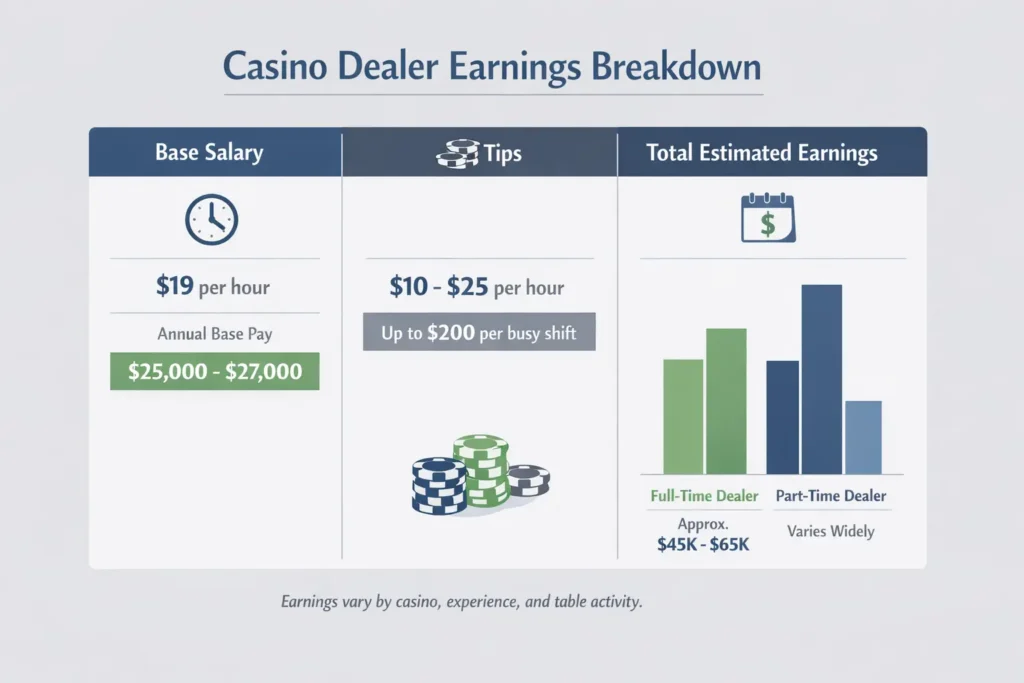
Casino dealer pay typically starts with an hourly wage. According to the U.S. Bureau of Labor Statistics, the mean hourly wage for gambling dealers in the United States was about $19.25 per hour. For new dealers, annual base earnings are commonly in the mid-$25,000 range, before tips are added.
Actual pay varies depending on experience, casino size, and location.
Full-Time vs Part-Time Dealers
Full-time dealers generally work around 40 hours per week and benefit from more consistent scheduling. Part-time or extra-board dealers, on the other hand, are scheduled as needed. While this can be a way to enter the industry, hours and income tend to fluctuate, and benefits are often limited. Dealers trained in multiple games, such as Blackjack, Roulette, or Craps, may receive more shifts and steadier pay.
How Much Do Casino Dealers Make in Tips?
For most casino dealers, tips make the biggest difference in overall income.
Daily Tip Earnings
In busy casinos, dealers commonly earn hundreds of dollars per day in tips. Many report averages around $200 per day, depending on the game, shift, and player traffic.
When broken down hourly, tips can add anywhere from $10 to $25 per hour on top of base pay. Over weeks and months, this extra income significantly changes total earnings.
How Tipping Works at Casino Tables
Players tip dealers in a few common ways. Some hand over chips or cash directly when leaving a table. Others place small bets on the dealer’s behalf during the game. If the bet wins, the dealer receives the payout.
Because dealers interact with a steady stream of players, even small tips accumulate quickly, especially during busy periods or winning streaks.
Tip Pooling vs Keeping Your Own Tips
Some casinos combine all dealer tips into a shared pool and divide them evenly. This creates more consistent income across slow and busy tables. Other casinos allow dealers to keep tips given directly to them, which rewards personal performance more directly.
Games such as Blackjack, Craps, and Mini-Baccarat are often associated with stronger tipping activity due to faster play and higher table energy.
Perks of Working as a Casino Dealer
Beyond wages and tips, casino dealers often receive additional benefits that make the role more attractive.
Access to Employee Benefits
Many casinos offer benefits to their dealers, especially those working full-time. These can include health insurance, paid time off, bonus programs, and retirement-related options such as 401(k) match plans. The exact coverage depends on the casino, but larger casino groups often provide more comprehensive benefit packages.
Paid Training and Skill Development
Casino dealers often receive structured training through in-house programs or dealer schools partnered with the casino. Training covers game rules, dealing procedures, customer etiquette, and game protection. Dealers who learn multiple games become more valuable to the casino and may receive more consistent scheduling.
Comfortable and Controlled Work Environment
Casinos are designed for continuous operation, which means dealers typically work in well-lit, climate-controlled, and organized environments. Employee dining rooms are common, with some casinos offering free meals and others providing food at a very low cost during shifts.
Flexible Scheduling Options
Because casinos operate 24 hours a day, dealers can work a variety of shifts. Time-off requests are usually manageable, and many casinos allow schedule adjustments or early-outs for emergencies. This flexibility appeals to people looking for non-traditional work hours.
Structured Break System
Dealers generally follow a fixed rotation that includes regular breaks. A common structure is working around ninety minutes at the table followed by a thirty-minute break. This system helps reduce fatigue and allows dealers to stay focused during active dealing periods.
Workplace Camaraderie
Casino dealing is a highly social job. Shared break times and team-based schedules give dealers opportunities to interact with coworkers, exchange experiences, and build long-term professional relationships. This sense of camaraderie is often cited as a positive aspect of the role.
Career Mobility and Advancement
With experience, dealers may transfer to other company-owned casino properties, sometimes across different states. Many also advance into supervisory roles such as pit management or move into other casino departments, using their table-game experience as a foundation for career growth.
Wrapping Up
A casino dealer’s income isn’t fixed to one number. It changes with hours worked, table traffic, and experience. Tips often fill the gap between average and strong earnings, especially during busy periods. Over time, dealers who learn more games, stay consistent with shifts, and handle tables smoothly tend to see steadier income. It’s a role where small improvements can make a noticeable difference.
FAQs
Training to become a casino dealer can be completed in as little as two weeks. Some casinos provide in-house training, while others prefer candidates who attend dealer schools. The timeline depends on the casino and the games being learned.
Yes. Dealers trained in multiple games are often scheduled for more shifts, which can lead to more consistent pay and greater tip opportunities.
Assignments are typically made by management, though learning multiple games increases flexibility and scheduling opportunities.
No. Dealers follow structured rotations that include regular breaks. An 8-hour shift typically includes several breaks, reducing continuous table time.
Yes. Many casino groups allow experienced dealers to transfer between company-owned properties, sometimes across different states